Four Days in Xi'an, the City and the Army
Four days that cover the Terracotta Army properly, cycle the whole Ming wall, get into the Shaanxi History Museum and leave room for Shajinqiao's morning market. Monday closures and ticket bookings are built in.
- Duration
- 4 days
- Budget
- About ¥1,600–2,600 per person (about $229–371), excluding transport to and from Xi'an
- Stops
- 12
Breakfast near the Bell Tower
Meatball hulatang or zenggao, ¥10–25 (about $1.4–3.6). Eat where the locals are, not on the main visitor street.
Cycle the city wall from the South Gate
Entry ¥54 (about $7.7) and a bike ¥45 (about $6.4) for 100 minutes. The full 14.7 km takes about two hours; return the bike at any gate.
Stele Forest Museum
Calligraphy carved into stone over more than a thousand years. Give it two hours even if you cannot read the characters; the Six Steeds of Zhaoling are here.
Dinner in Dapiyuan, then Datang Everbright City
Roujiamo and yangrou paomo in the side lanes, then walk south for the free Tang-lit street and its performers after dark.
Bus 306 out to Lintong
From the east square of Xi'an Railway Station, ¥7 (about $1), about 70 minutes. No shopping stops, unlike hotel day tours.
Terracotta Army with an official guide
¥120 (about $17) entry, guide ¥150–200 (about $21–29) for two hours. See pits three and two before the famous Pit 1.
The museum galleries
Bronze chariots, weapons and tools behind the pits — the context that makes the army more than a row of figures.
Huaqing Palace and the evening show
Palace entry ¥120 (about $17). The Song of Everlasting Sorrow starts around ¥238 (about $34); book ahead in peak season and pre-arrange your ride back.
Shaanxi History Museum
Free but timed real-name booking, about five days ahead, closed Mondays. The Hejiacun gold and silver hoard is the headline.
Small Wild Goose Pagoda and Xi'an Museum
The quiet pagoda, with the Jianfu Temple bell. A good counterpoint to the busy museum morning.
Shajinqiao morning market
A local breakfast street — roujiamo, zenggao and meatball hulatang. Go before seven; much of it is packed up by nine.
Great Mosque and souvenir browsing
The Tang-founded courtyard mosque on Huajue Lane, then crystal cakes, fu brick tea or a boxed terracotta figure before you leave.
Day one: the wall and the old city
Begin with breakfast near the Bell Tower. A bowl of meatball hulatang, ¥10–25 (about $1.4–3.6), is how Xi’an wakes up in the cold months; zenggao is the sweet alternative. Then take Metro Line 2 to the South Gate, the largest and most imposing of the Ming gates.
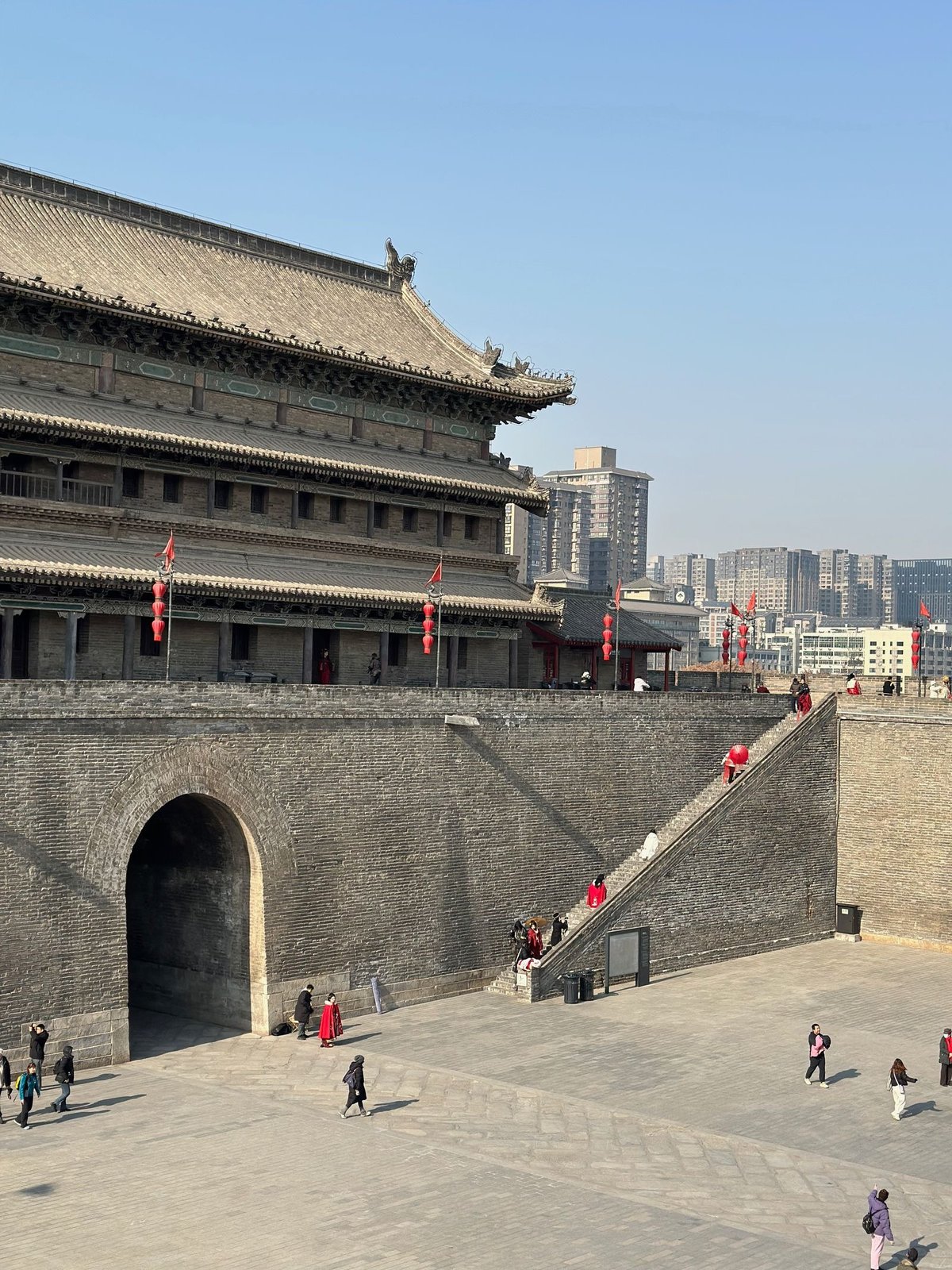
Entry is ¥54 (about $7.7) and a bike is ¥45 (about $6.4) for 100 minutes. The circuit is 14.7 km and takes about two hours at an easy pace. The trick is to stop twice, not twelve times — the rental clock is short, and you can hand the bike in at any gate. Late morning is fine; dusk is prettier but busier. The view inward, across the parapet at the old city grid, is the reason to ride rather than walk.
In the afternoon, the Stele Forest is two hours well spent. It is a calligraphy pilgrimage — stone stelae with centuries of scripts carved into them — and it sits in the south-east corner of the old city. From there, walk or take the metro to the Muslim Quarter, but eat in Dapiyuan, one lane off Beiyuanmen, where a roujiamo costs ¥10–15 (about $1.4–2.1) and a bowl of yangrou paomo ¥25–35 (about $3.6–5).
After dinner, go south. The fountain square in front of the Giant Wild Goose Pagoda and then Datang Everbright City are free, and after dark the whole district turns into a Tang-themed street with costumed performers. It is crowded and thoroughly modern, but a good first-night introduction to the city.
Day two: the full Lintong day
Leave at seven. Bus 306 from the east square of Xi’an Railway Station costs ¥7 (about $1) and takes about 70 minutes, with no shopping stops. Avoid the day tours sold through hotels.
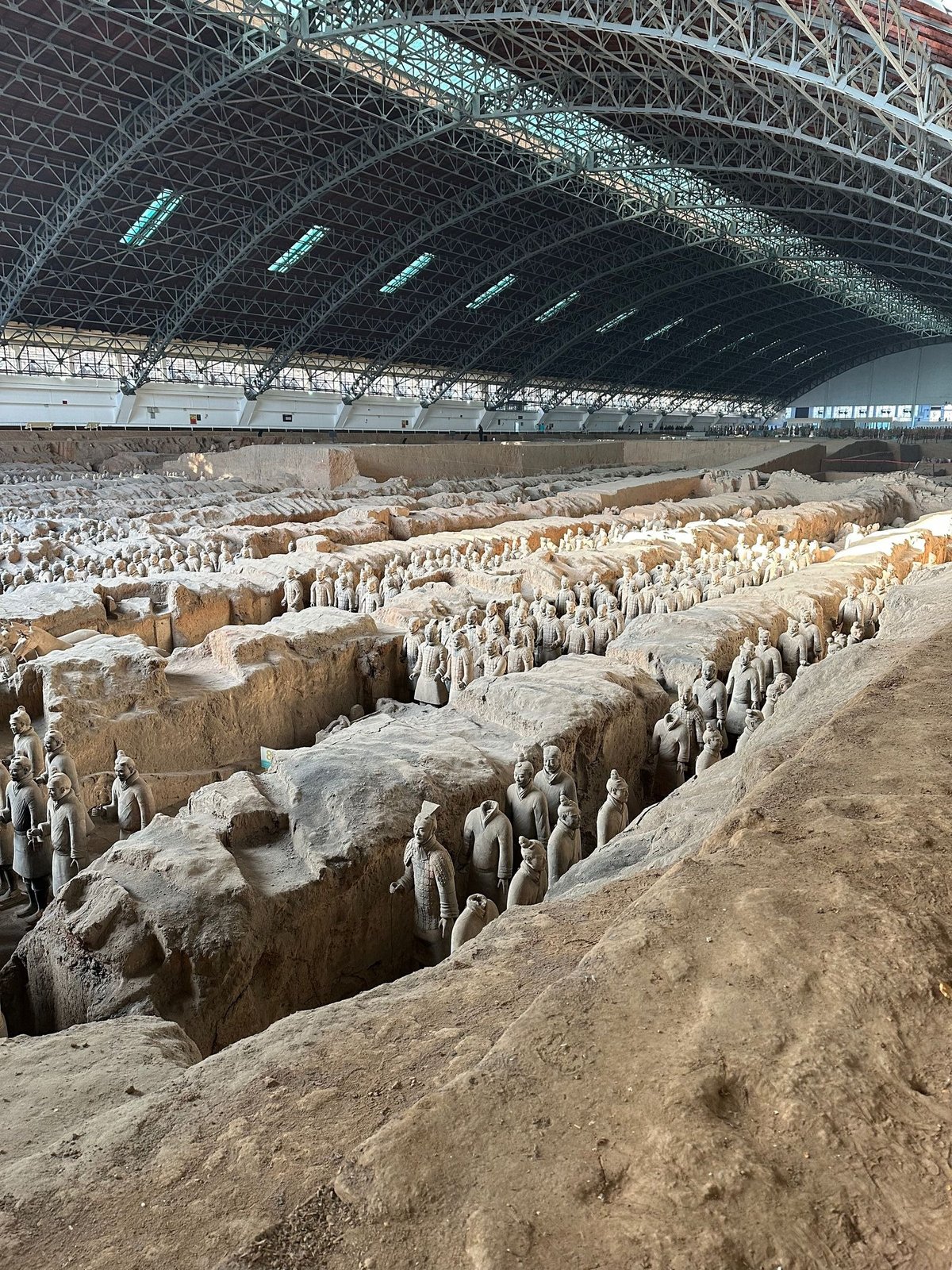
At the site, entry is ¥120 (about $17). Hire the official guide at the ticket office for ¥150–200 (about $21–29) for two hours — it is the difference between clay statues and an army. Go through Pit 3 and Pit 2 first and finish in Pit 1, which empties toward lunch. Then spend time in the museum galleries with the bronze chariots.
Huaqing Palace is minutes away. Entry is ¥120 (about $17), and it covers both Tang hot-spring ruins and the Xi’an Incident site. If you can get a ticket for The Song of Everlasting Sorrow, from ¥238 (about $34), stay for it — the hillside is the stage. Book a car back to the city in advance; the post-show taxi queue is brutal.
Day three: museums, quieter
Book the Shaanxi History Museum about five days ahead through its official channel. It is free, needs real-name registration and closes on Mondays. Give it two to three hours, with the Hejiacun gold and silver hoard as the core. If you cannot get a slot, use the Qin-Han branch in Xixian New Area or a special-exhibition ticket.
In the afternoon go to the Small Wild Goose Pagoda and Xi’an Museum. It is the quiet version of the city’s Tang sites, with the old Jianfu Temple bell, and it makes a calm counterpoint to a busy museum morning. Keep the evening free.
Day four: breakfast like a local
Shajinqiao is a real breakfast street, and it is best before seven. Roujiamo straight from the oven, zenggao still warm, and a bowl of meatball hulatang will set you up for the day. By nine the stalls are packing away, so this is not a lie-in morning.
Late morning, visit the Great Mosque on Huajue Lane. Founded in the Tang dynasty, it is a sequence of Chinese courtyards rather than a domed building, and most visitors walk straight past it. Then pick up crystal cakes, fu brick tea or a boxed terracotta figure from a regular shop rather than inside a sight.
Two things to fix before you go
Check the days. The Shaanxi History Museum and several other museums close on Mondays, so swap days if needed, and follow the official notice when a public holiday lands on a Monday. Book the museum and, in peak season, The Song of Everlasting Sorrow well ahead; both sell out.
And check the station. High-speed trains arrive at Xi’an North, about 40 minutes to the Bell Tower on Metro Line 2. Xi’an East station also entered service on 30 June 2026, so read your ticket carefully. The bus to the Terracotta Army leaves from the old Xi’an Railway Station, not either high-speed station.
Common questions
What if day three is a Monday?
The Shaanxi History Museum closes on Mondays and many other museums do too. Swap day three with day four, or move the museum to the afternoon of day one. On public holidays that fall on a Monday, follow the official announcement.
Can I do the Terracotta Army in half a day?
Technically yes, but you will be travelling most of it. This plan gives it a full day with Huaqing Palace because both are 35–40 km out of the city and the evening show is there.
Is four days too long?
Not if you want the city as well as the army. Two days covers the highlights; four lets you cycle the whole wall, get into the museum and eat a local breakfast without rushing. Add Mount Hua only if you have a fifth.
Related
Three days in Beijing, both cities
One day for the imperial city and the lanes, a full day for the Wall, and a day that starts with dawn at the Temple of Heaven. There are alternatives for Monday closures and bad visibility.
Three Days in Chengdu, Planned Around Pandas and Tea
One day for the panda base and the old city, one for Dujiangyan, one given over to teahouses and street food. Monday closures, rain and long queues all have a way around them.
Three Days in Chongqing, Climbing and Eating
One day for the old town and stairways, one for the cableway and the lights, one for Wulong's natural stone bridges. There are slopes and steps everywhere — good shoes matter more than a good plan.
Want a plan that fits your dates?
Tell us your dates, budget and what you actually like doing — we will send back a day-by-day plan by email. No charge for the first draft.
Plan with us →