Mar – May
8–22°C
The gardens fill with flowers and the air is cool — the best months for gardens and walking.
Best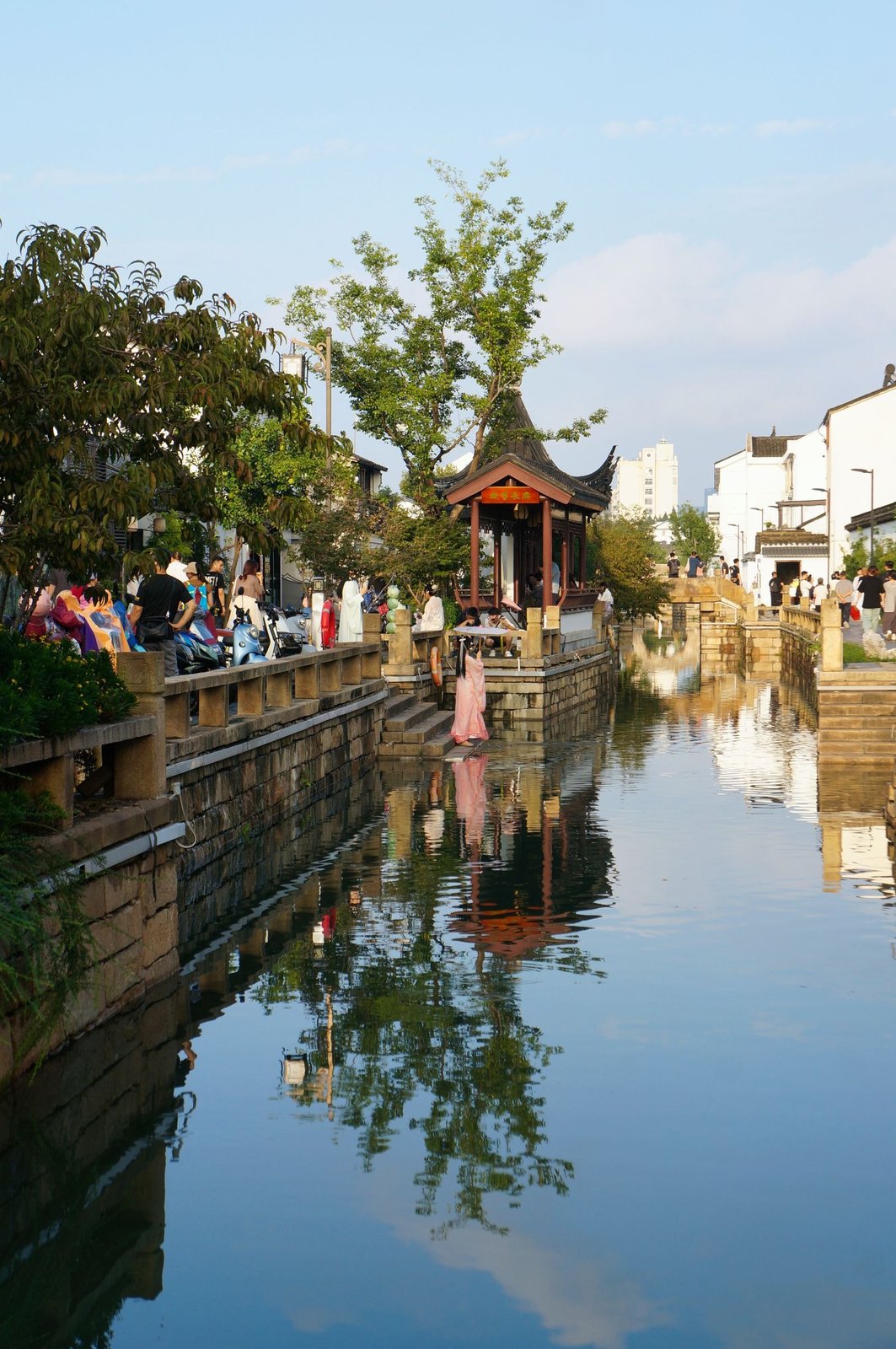
Where the city splits, when to come, and how to spend a first day.
The gardens fill with flowers and the air is cool — the best months for gardens and walking.
BestHot, humid and rainy. Museums and teahouses are the afternoon refuge, and three-shrimp noodles are in season only now.
ToughClear skies and osmanthus in the air; the evening boat rides on Shantang Street pick up again.
PleasantDamp cold that feels colder than the numbers suggest. Few crowds, and the gardens are quiet.
QuietYou are here now: Autumn, 15–28°C.
Braised pork or crispy fish over thin noodles in clear broth, ¥20–40 (about $2.9–5.7). Locals turn up before seven for the first pot.
The classic Jiangnan garden, ¥70–80 (about $10–11). Come early and the corridors are almost empty.
Designed by I. M. Pei. Free but book ahead, closed Mondays. Right next to the garden.
An old street along the canal, lined with bookshops, teahouses and snacks. Sit down for a stretch of pingtan storytelling when your legs give out.
Walk the lantern-lit canal or take a boat from about ¥50 (about $7.1).
Suzhou is famous for its gardens, but after two days you notice something harder to name: the rhythm of everyday life. By seven in the morning the noodle shops are full, each bowl set down in silence. The gardens open soon after with only a few people taking photographs. On Pingjiang Road, shopkeepers are in no hurry to greet you.
The city is about two and a half thousand years old and was long a model of wealth and taste in southern China. The gardens are works by scholars, built to make a small space feel layered: a moon gate, a latticed window, a piece of Taihu rock, and a new view from every angle. You cannot rush them. Walk fast and you see nothing.
The Humble Administrator’s Garden is the largest and the best known. Water takes up more than half of it, with pavilions scattered along the banks, and azaleas and wisteria in spring. For a first visit, start here. Entry is ¥80 (about $11) in peak season and ¥70 (about $10) off season; arrive around half past eight to get ahead of the tour groups.
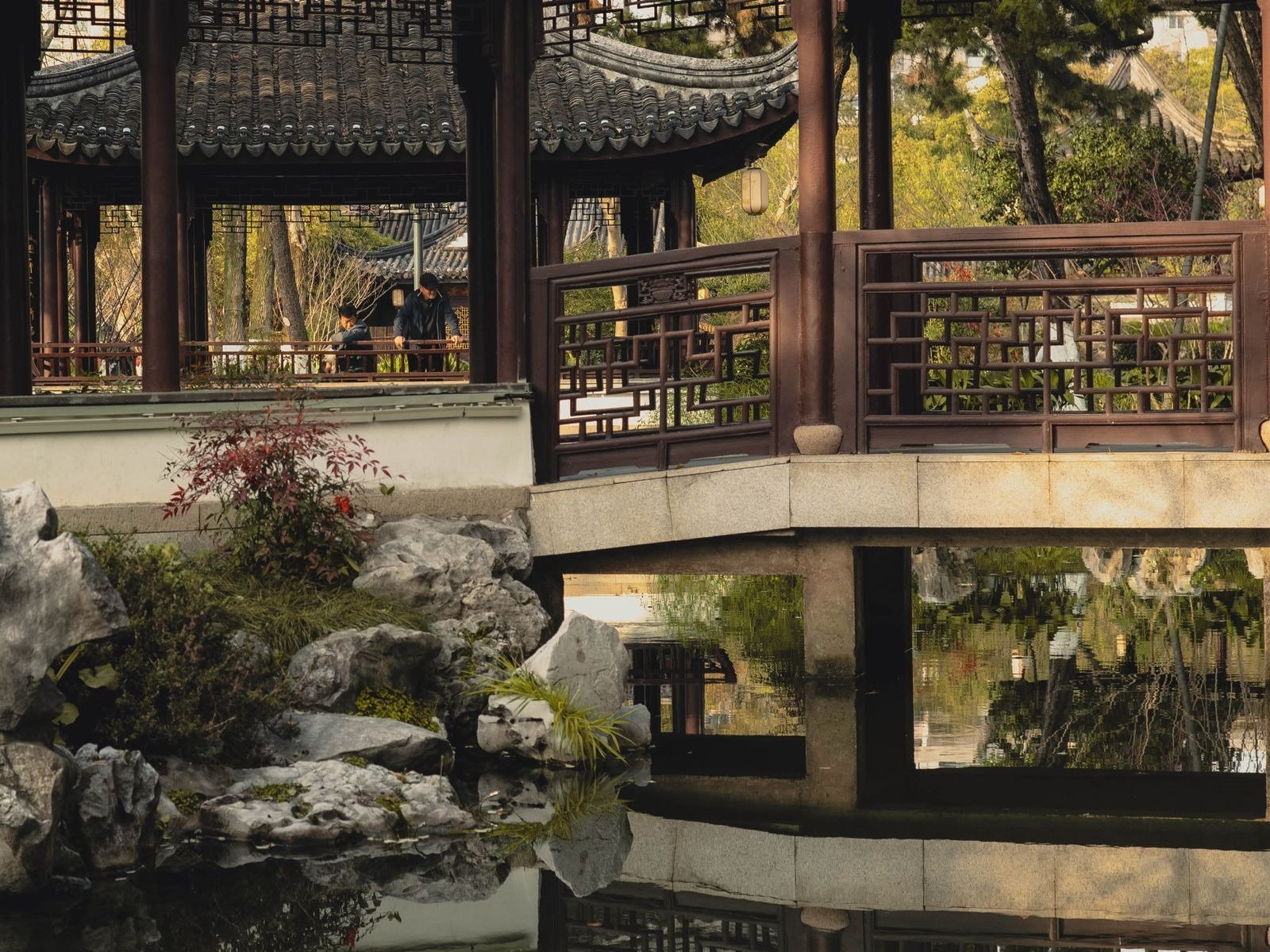
The Lingering Garden is more intricate. It is less open, using corridors and courtyards and a famous rock called the Cloud-Crowned Peak to divide space into layers. The two gardens are quite different, and both are worth the time if you have it.
Suzhou Museum sits right beside the Humble Administrator’s Garden. I. M. Pei designed it, setting white walls and grey roofs into sharp geometric forms. It is free but needs a booking and closes on Mondays. The collection is modest; the building itself is the reason to come.
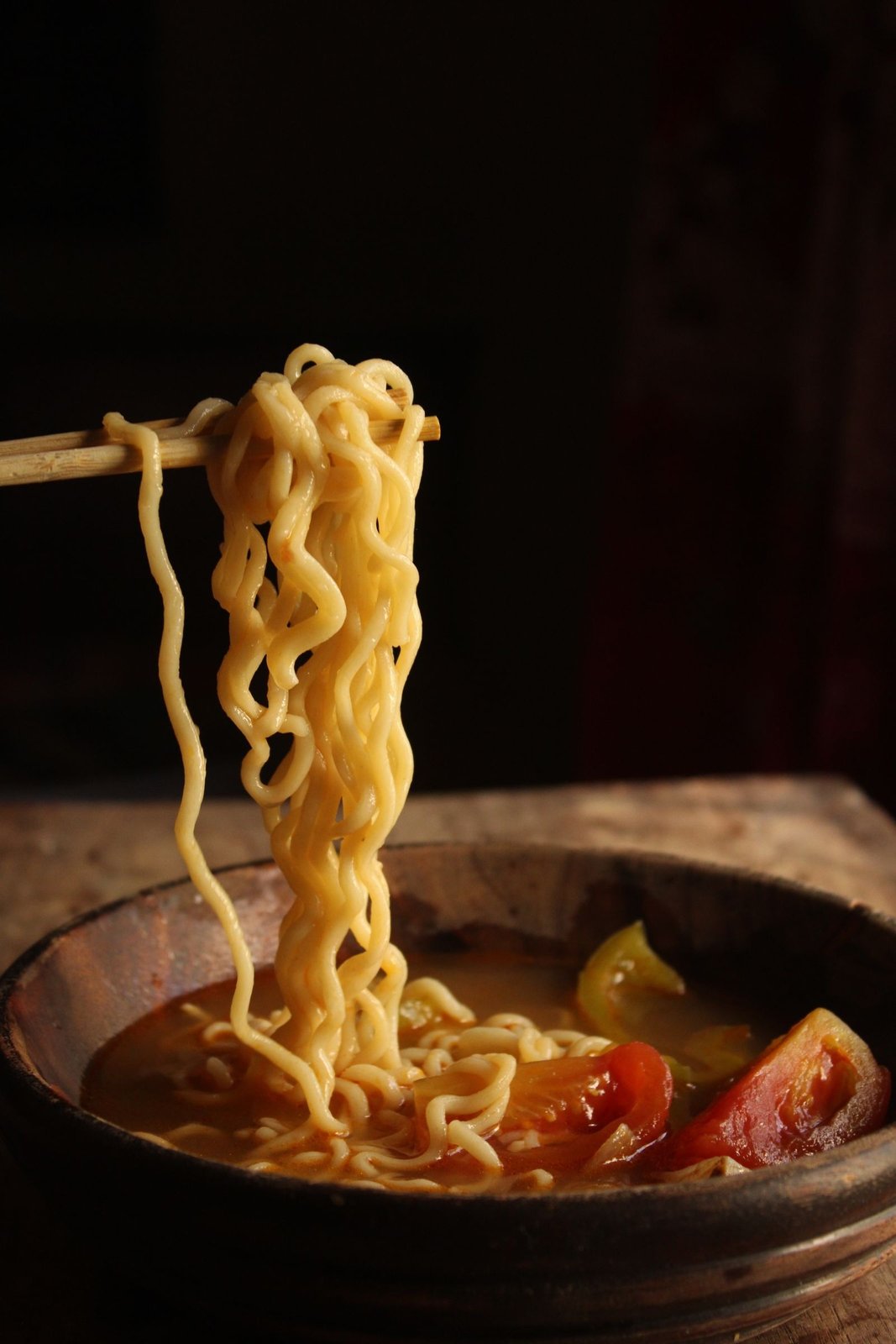
Suzhou noodles are a different thing from northern noodles. The broth is clear, made slowly from eel bones and pork; the noodles are thin and firm, pulled from the pot the moment they are done; the toppings come separately, braised pork that holds its shape, or crispy fish sweet on the outside and tender within. Noodle shops talk about the first brew and the second brew, and regulars arrive before seven for the first.
After breakfast, settle into a teahouse. Small storytelling halls along Pingjiang Road put on pingtan — pipa and sanxian accompanying a tale told in the Suzhou dialect. You will not follow the words, but the rising and falling melody and the listeners closing their eyes are the art in person. A set costs about ¥50–80 (about $7.1–11) with tea.
Pingjiang Road is an old street along the canal, whitewashed houses and small stone bridges on one side, bookshops, pastry stores and teahouses on the other. It is free and made for wandering, and the morning is the best time, when the shops have just opened and the crowds have not arrived.
Shantang Street comes alive at night. Bai Juyi built this seven-li lane; by day it is an ordinary old street, but after dark red lanterns light both banks and boats move one after another along the water. Walking the canal is free; a boat ride is about ¥50 (about $7.1).
The old town’s sights cluster together — the garden, the museum and Pingjiang Road make one walkable stretch — and metro Lines 1 and 4 cover the main stops, ¥2–6 (about $0.3–0.9) a ride with a transit QR code on your phone. High-speed trains from Shanghai Hongqiao reach Suzhou North in about 25 minutes; Suzhou station is the one closer to the old town.
Don’t drink the tap water. Hotels have kettles and bottled water costs ¥2–3 (about $0.3–0.4). The gardens mean stone paving and steps, so wear shoes you can walk in. Summer is hot and humid, winter is damp and cold, and spring and autumn are the comfortable months.
There is no separate Suzhou visa — China's national rules apply. Passports from most European countries, plus Australia, New Zealand, Japan, South Korea and Canada currently get 30 days visa-free; US and UK passports can use the 240-hour transit waiver with an onward ticket. Check mfa.gov.cn before you book.
High-speed trains run from Shanghai Hongqiao to Suzhou North in about 25 minutes, or to Suzhou station in 30–40 minutes, around ¥40 (about $5.7) second class, with frequent departures. Suzhou station is closer to the old town — a ten-minute taxi gets you to Pingjiang Road.
Buy tickets for the Humble Administrator's Garden and the Lingering Garden ahead of time on busy weekends. Suzhou Museum is free but needs a reservation and closes Mondays, so don't turn up on the wrong day.
A notch below Shanghai. A bowl of noodles is ¥20–40 (about $2.9–5.7), garden entry ¥70–80 (about $10–11), and a mid-range hotel ¥400–700 (about $57–100). The old town's sights cluster together, so walking and the metro are enough.
Two full days cover the main gardens and old streets: one for the Humble Administrator's Garden, the museum and Pingjiang Road; one for Tiger Hill, the Lingering Garden and Shantang Street. Add a third for the water towns.
Yes. A storytelling set lasts about forty minutes with a pot of tea, ¥50–80 (about $7.1–11). Even if the words escape you, the rise and fall of the pipa and sanxian, and the storyteller's expressions, are the performance.
One email, no forms. Tell us when you land and what you like eating.
Plan with us →The neighbourhoods and day trips worth the trip out.
02Ready-made routes by length, with fixes for rain and closed museums.
03What to order, where to sit, and what to do after dark.
04Concerts, exhibitions and the seasonal windows locals wait for.
05The long reads — history, culture and the questions visitors get wrong.
06Payments, trains, data, language — the same in every city.
07Send your dates and we send back a day-by-day plan.