Mar – May
9–24°C
The Su Causeway in bloom and the first Longjing tea of the year. Hangzhou at its best.
Best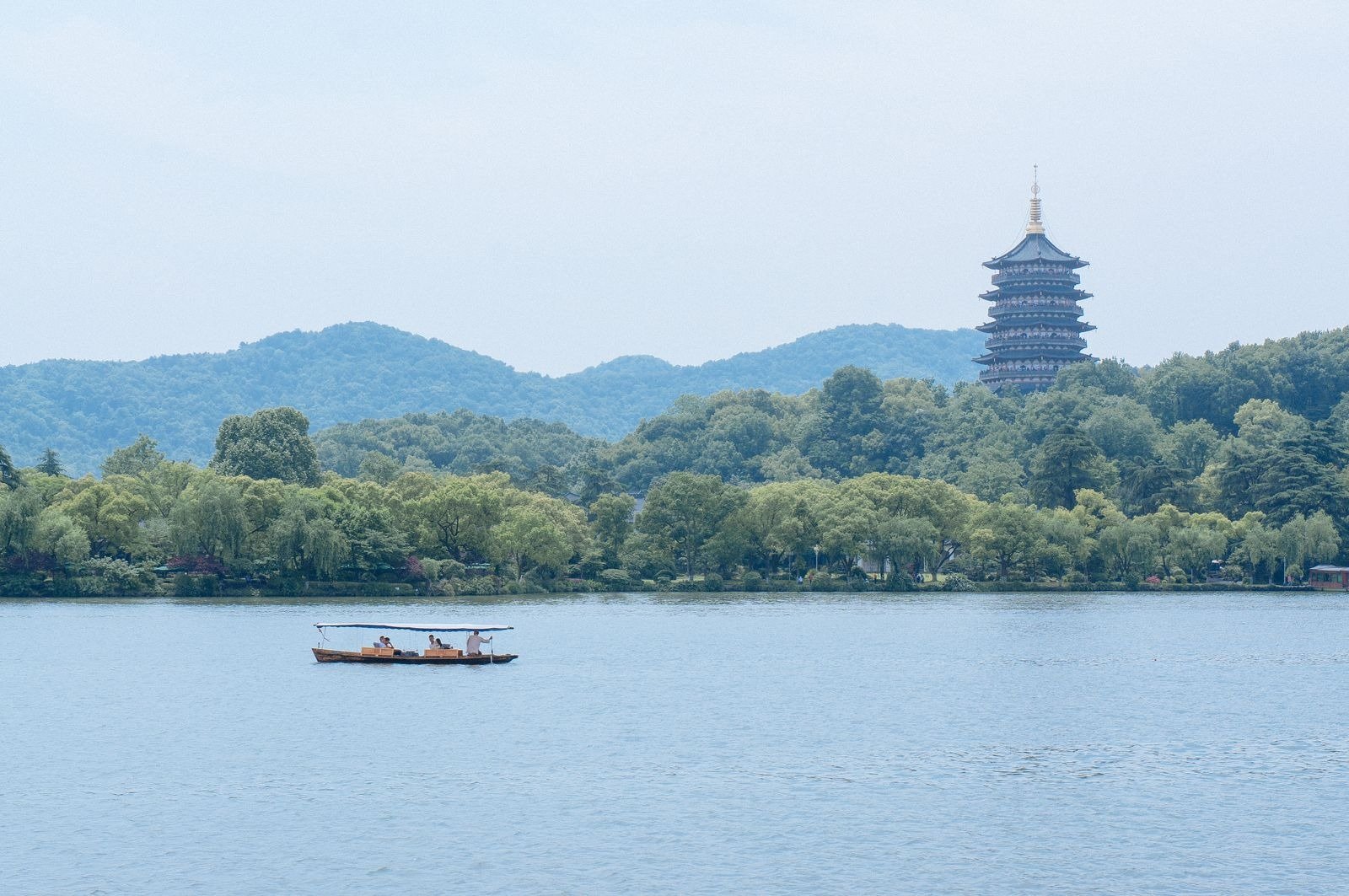
Where the city splits, when to come, and how to spend a first day.
The Su Causeway in bloom and the first Longjing tea of the year. Hangzhou at its best.
BestHot, humid and often wet, with afternoon thunderstorms. The lotus is in flower, but avoid midday.
ToughOsmanthus blooms at Manjuelong, the water clears, and the air is crisp. Made for walking.
BestDamp and chilly; snow on the Broken Bridge is a matter of luck. Fewer crowds, long teahouse afternoons.
Cold and dampYou are here now: Autumn, 15–28°C.
Almost nobody about, mist on the water, locals doing tai chi and brisk walks. Free.
Feilai Peak plus the temple comes to about ¥75 (about $11). Arrive early, before the tour groups.
Dongpo pork, Longjing shrimp, pian er chuan noodles. Two people eat well for about ¥200 (about $29).
Sit in a tea farmer's house, ¥30–80 (about $4.3–11) a cup, and let the afternoon go.
Walk the lakeside after dark, then eat on the old street. Check the day's notice for the fountain.
Hangzhou’s appeal isn’t any single sight. It is how closely the lake and the city sit together. West Lake is right in the middle of town, ringed by ten kilometres of paths that look different in every season. Daily life still folds around the water — people walking at dawn on the Broken Bridge, walking dogs along the shore at dusk, families rowing out to Three Pools on a weekend.
There is more here than scenery. The Southern Song dynasty ruled from the city for over a century, leaving not just the shows at Songcheng but the names of the streets, the recipes of local cooking, and a certain confidence about taking life slowly.
West Lake is free and best seen early. At first light the Broken Bridge and Bai Causeway are almost empty, mist hangs over the water, and locals are out walking, doing tai chi or taking photographs. Later the crowds arrive, and the Su Causeway is the way to go — the view changes section by section, and there are benches whenever your legs ask for one.
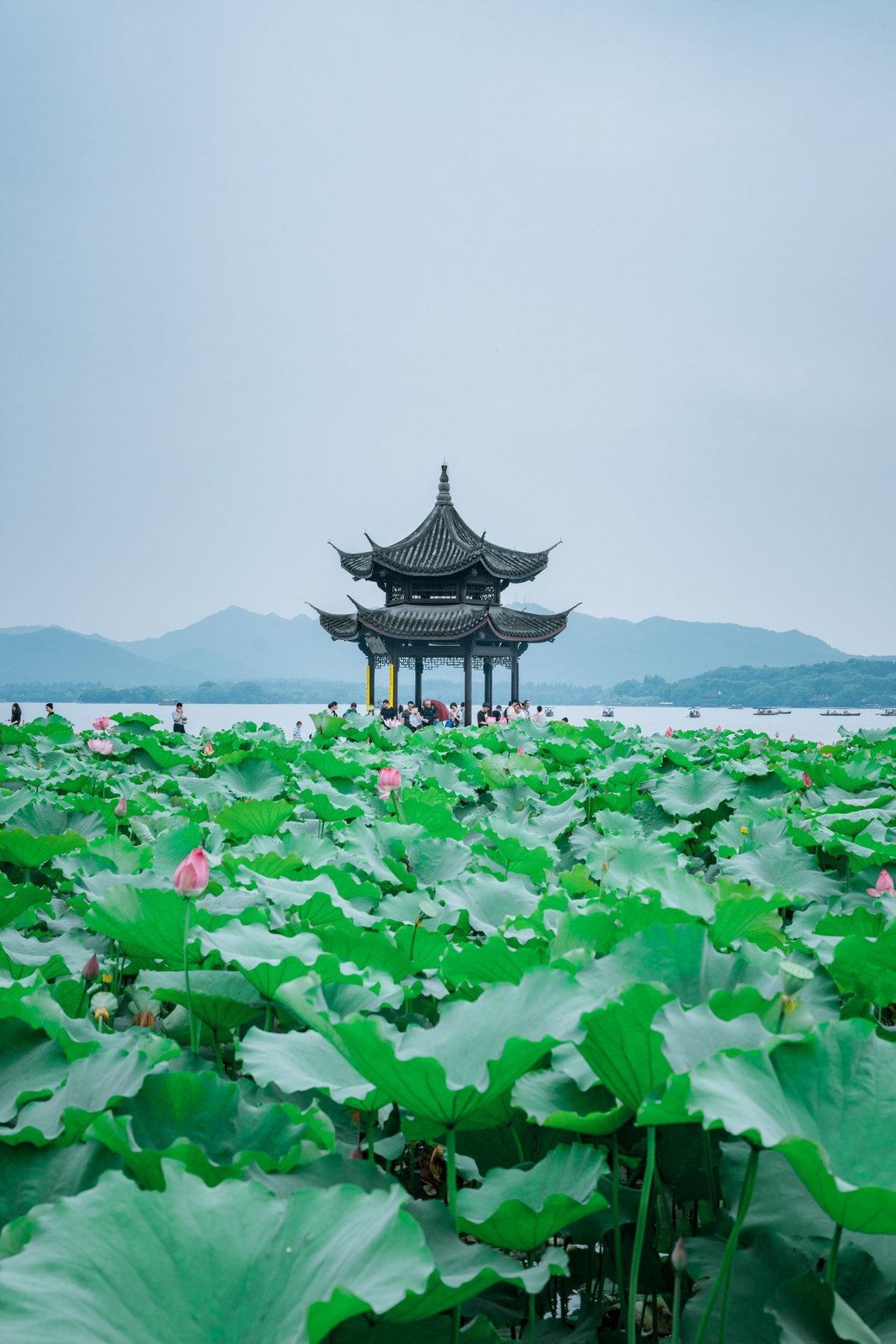
Leifeng Pagoda stands on the south bank. Admission is ¥40 (about $5.7) and the climb gives you the whole lake at once. If you would rather not pay, see the pagoda from the Changqiao Park side, where the light is best near sunset. Three Pools Mirroring the Moon is out on the water: the combined ticket at ¥75 (about $11) includes the boat both ways.
Walk west from the lake and you reach the foot of the hills where Lingyin Temple sits. First comes Feilai Peak, its rock faces carved with Buddhist figures over a thousand years; then the temple itself, still busy with incense. Arrive around seven or eight in the morning, before the tour groups, and the courtyards are quiet.
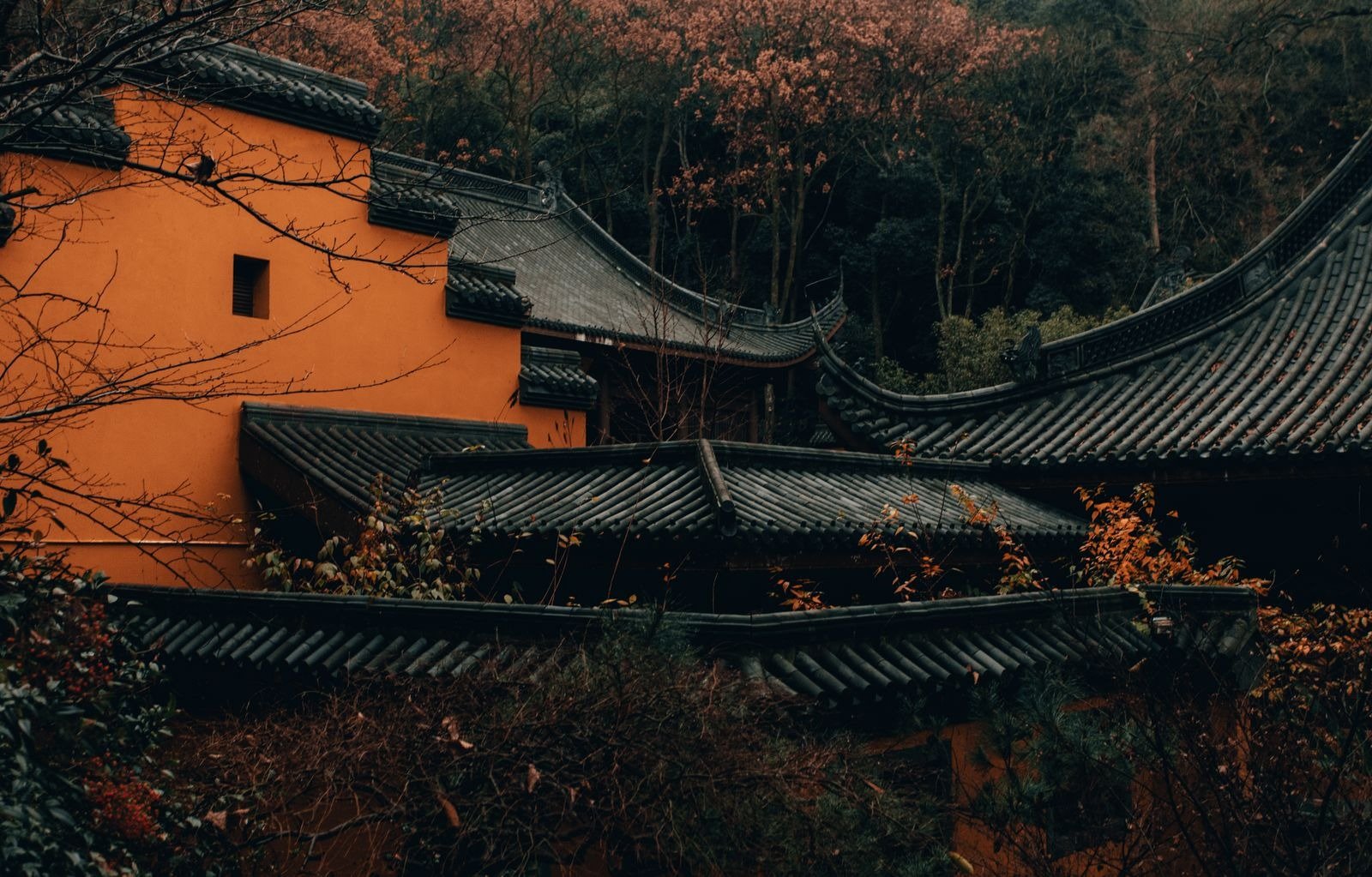
The two tickets are separate: ¥45 (about $6.4) for Feilai Peak, then ¥30 (about $4.3) to enter the temple. Keep your voice down inside, and check the signs before photographing. A bowl of noodles just outside the gate is the usual lunch here.
Locals drink Longjing tea in more places than museums. The tea picked before the Qingming festival is the most prized. In spring, go to Longjing village or Mejiawu, sit down in a tea farmer’s house, and a cup costs ¥30–80 (about $4.3–11) with no hurry to leave. The China Tea Museum is free, but needs a booking through a phone app and closes on Mondays.
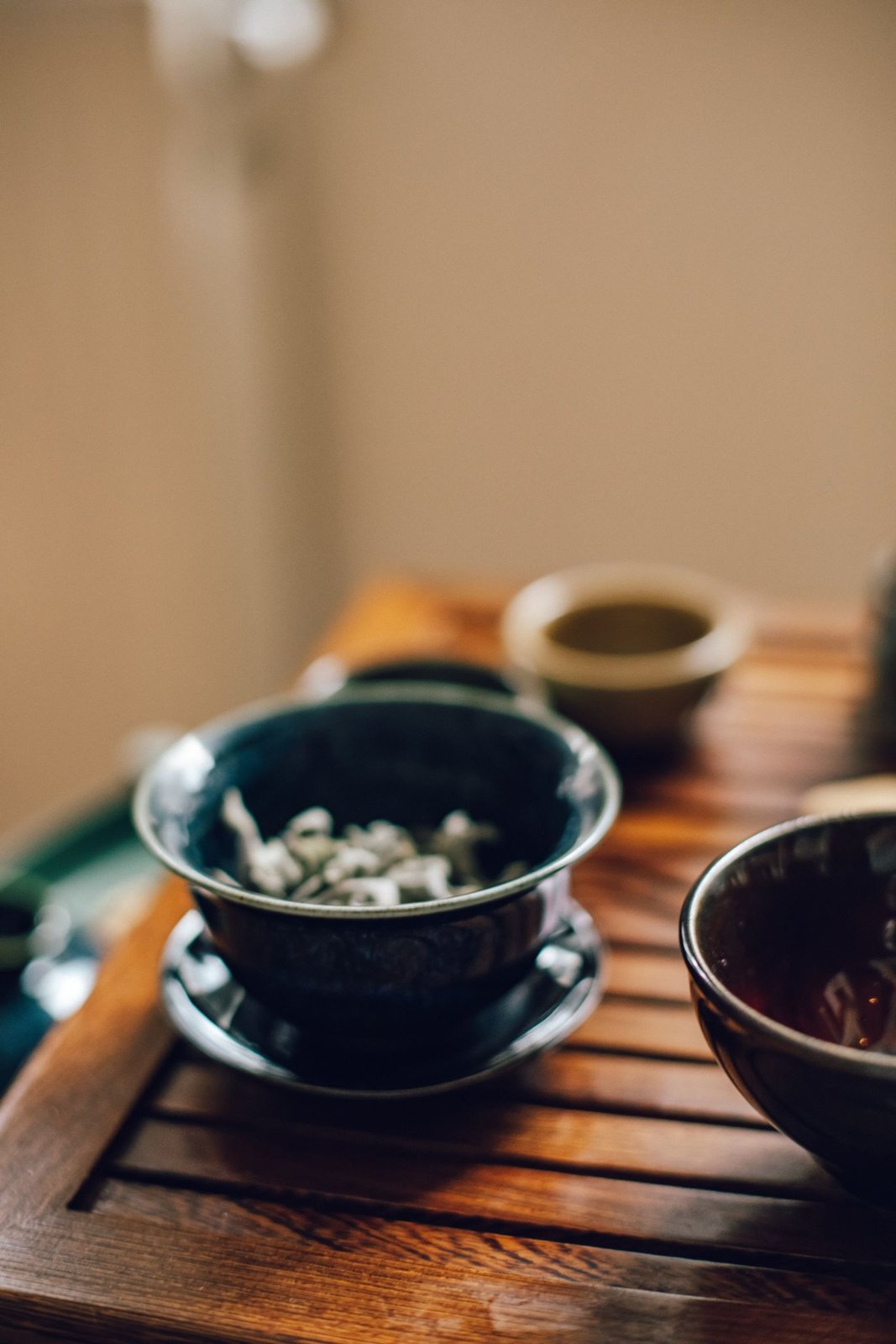
To really understand the tea, walk the Shuangfeng branch of the museum, where picking, roasting and brewing are all explained. From there the road climbs into the tea gardens, which are open and free to wander.
Xixi Wetland lies west of the city. Admission is ¥80 (about $11), and the boat ride through the reeds is the best part. Metro Line 3 gets you there, half a day is enough, and the waterside trees are at their best in autumn.
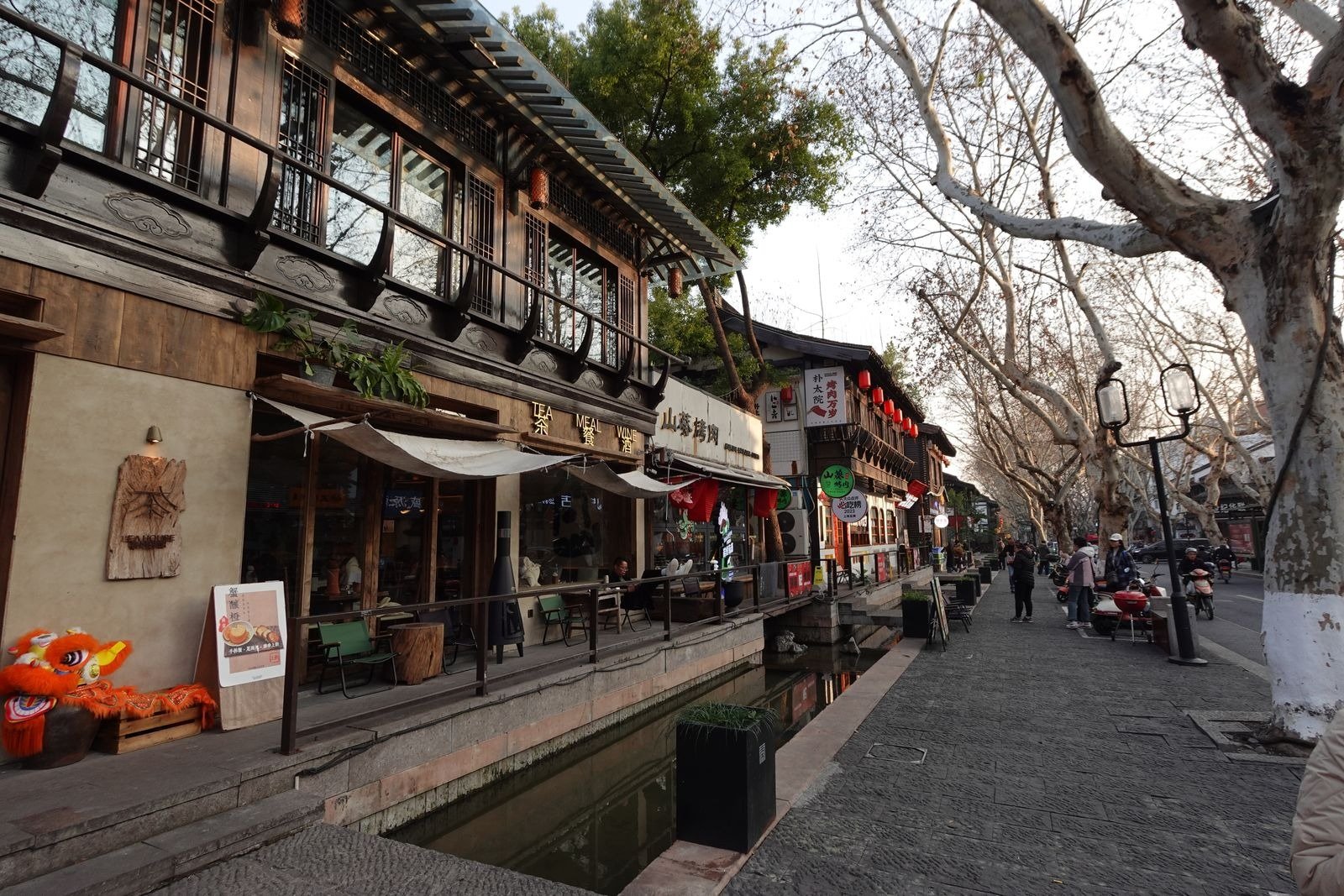
The Grand Canal is another side of Hangzhou entirely. Gongchen Bridge, the Qiaoxi old street and Xiaohe Straight Street run together, with no admission fee, and old houses have become museums of fans and umbrellas. At night, board at Wulinmen pier for a canal cruise; the lights lie flat in the water.
The metro reaches West Lake, Hangzhou East station and Xiaoshan airport; rides cost ¥2–8 (about $0.3–1.1) and you can pay with a transit code in a phone app. Walking is the best way around the lake, with the metro for longer hops. Don’t drink the tap water — hotels have kettles and bottled water costs ¥2–3 (about $0.3–0.4) everywhere. Summer is hot, humid and stormy, so check the forecast; spring and autumn are the easiest seasons on foot.
There is no separate Hangzhou visa — China's national rules apply. Passports from most European countries, plus Australia, New Zealand, Japan, South Korea and Canada currently get 30 days visa-free; US and UK passports can use the 240-hour transit waiver with an onward ticket. Check the official foreign ministry site before you book.
Metro Line 1 or Line 7 reaches the centre in about 40–50 minutes, ¥7–10 (about $1–1.4); airport buses also run. A taxi to the lakefront is ¥100–150 (about $14–21), 45–60 minutes and longer at peak times.
Not necessarily — the shore path is excellent, and a full circuit is about 10 kilometres. For Three Pools Mirroring the Moon, buy the combined ticket with the boat at ¥75 (about $11), or take a rowing boat from the lakefront.
A notch below Shanghai. A Hangzhou meal runs ¥80–150 (about $11–21) a head, mid-range hotels ¥350–700 (about $50–100), and metro rides ¥2–8 (about $0.3–1.1). Most of West Lake is free.
Three full days. One for West Lake, one for Lingyin Temple and the tea hills, one for Xixi Wetland or the canal and the old streets. Add a night if you want the Songcheng show.
You buy two separate tickets — ¥45 (about $6.4) for Feilai Peak, then ¥30 (about $4.3) incense-and-flower money to enter the temple itself, about ¥75 (about $11) in total. Both are sold on site, and early morning beats the queues.
One email, no forms. Tell us when you land and what you like eating.
Plan with us →The neighbourhoods and day trips worth the trip out.
02Ready-made routes by length, with fixes for rain and closed museums.
03What to order, where to sit, and what to do after dark.
04Concerts, exhibitions and the seasonal windows locals wait for.
05The long reads — history, culture and the questions visitors get wrong.
06Payments, trains, data, language — the same in every city.
07Send your dates and we send back a day-by-day plan.