Mar – May
15–25°C
Mild and clearing fog, but rainy — carry an umbrella.
Pleasant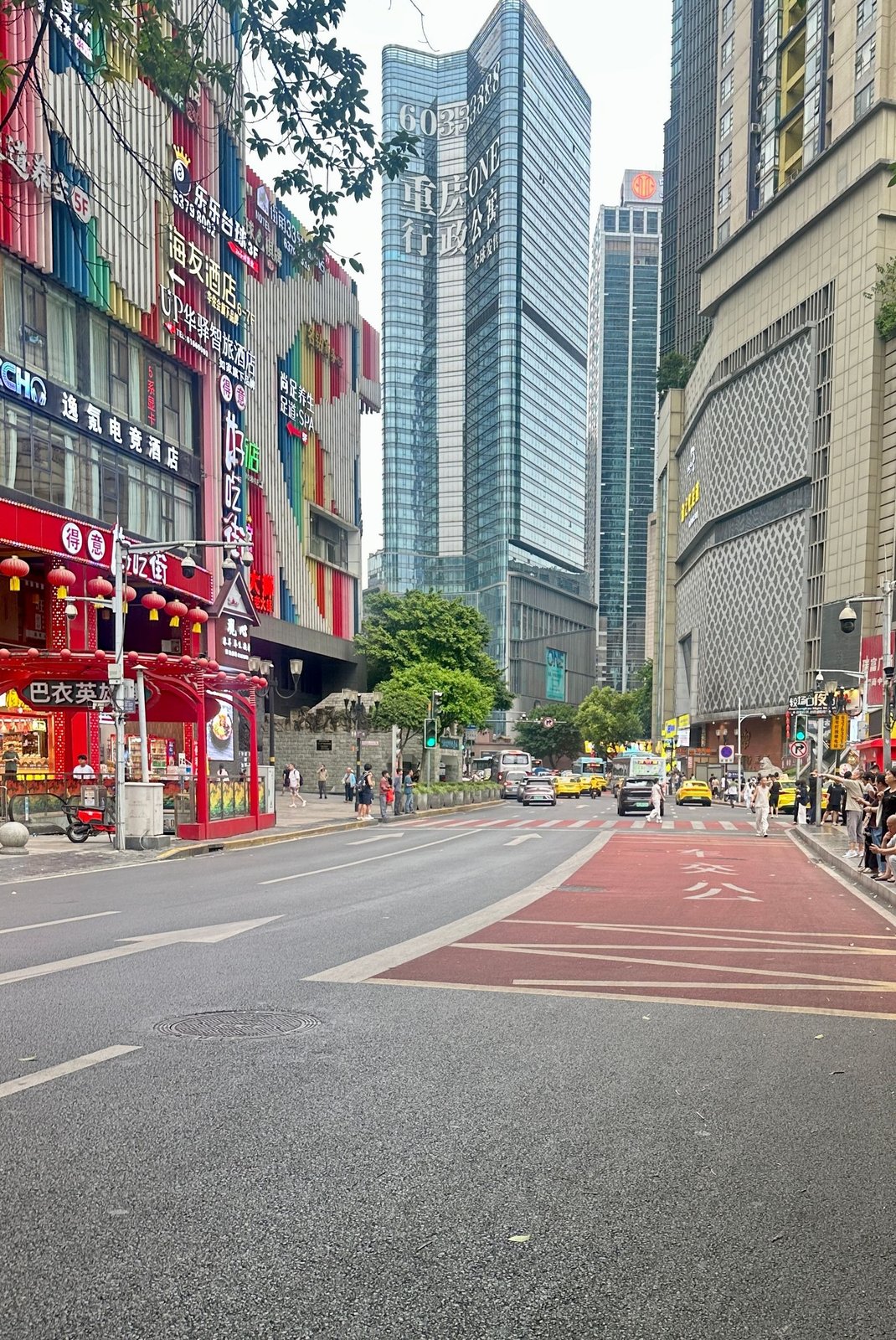
Where the city splits, when to come, and how to spend a first day.
Mild and clearing fog, but rainy — carry an umbrella.
PleasantOne of China's famous furnaces. Save your energy for dusk and after dark.
ToughThe best months — clear skies, ideal for the stairways and river views.
BestDamp cold and breezy by the water, but fewer crowds, lower prices and good hotpot weather.
ChillyYou are here now: Autumn, 18–28°C.
¥8–15 (about $1.1–2.1) at a street stall, maybe with a fried egg. How much chilli you ask for is the first conversation of the day.
An old riverside market lane, or a descent through a residential hillside. Pick one.
¥100–200 (about $14–29) a head. Say "mild" if you mean it — the beef-tallow broth only gets hotter as it cooks.
One looks down on two rivers bracketing the city; the other hangs above the water. Both are Chongqing angles.
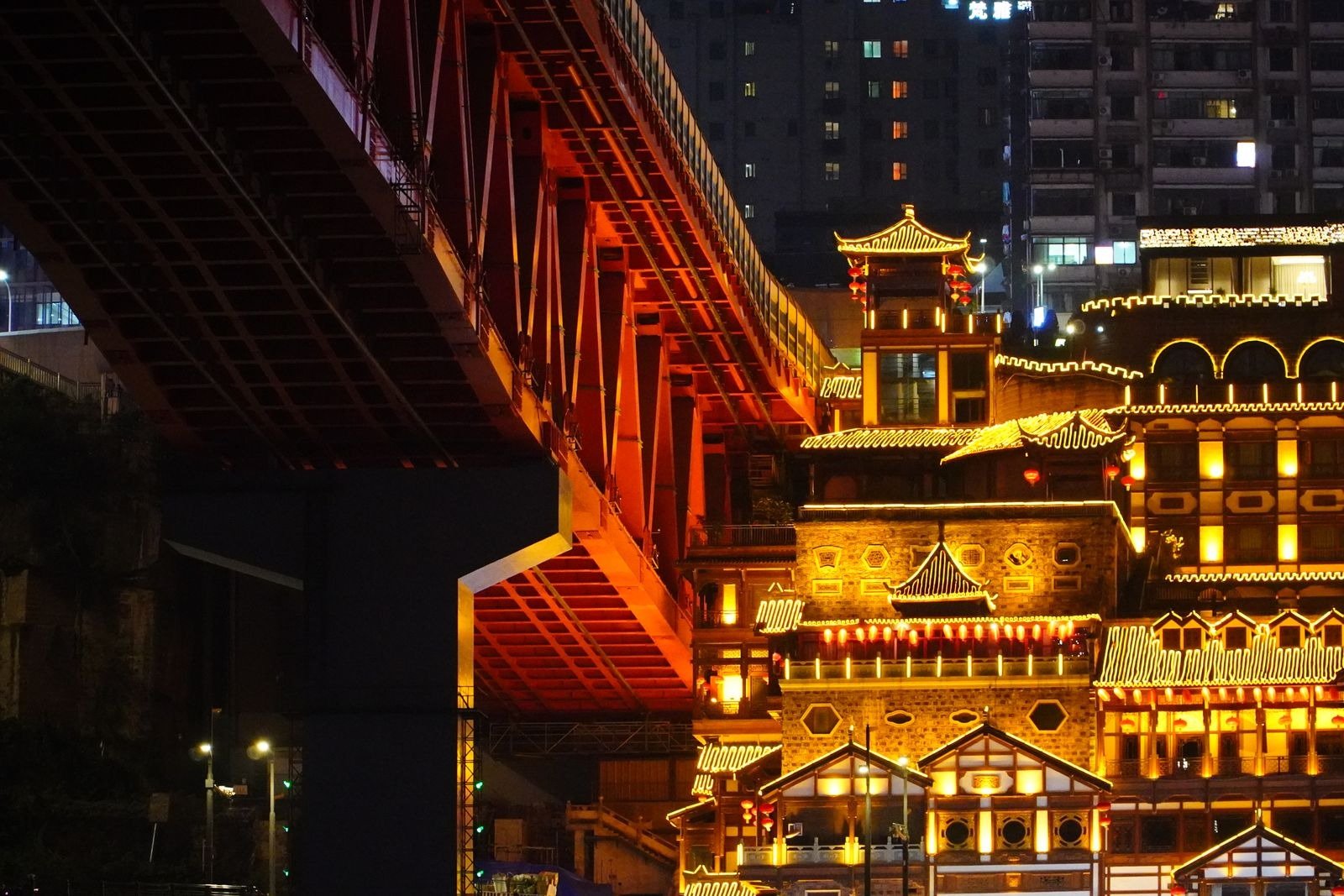
The stilted buildings glow after dark. See them from across the Jialing or from Qiansimen Bridge.
Chongqing cannot be taken in at a glance. Buildings climb the hills, roads thread between them, and you can be on what feels like the third floor only to open a window onto a river. First-timers double back at the same junction — not from poor direction sense, but because this city was never laid out flat.
It is also a river port. The Yangtze and the Jialing meet at Chaotianmen and divide the city into districts, which is why there are cableways, ferries and endless stone steps down to the water. Daily life here means climbing slopes, with a river visible from almost any window.
Jiefangbei is the centre, malls and hotpot places shoulder to shoulder, and Hongya Cave a short walk away. The real interest, though, is in the old stairways — paths between apartment blocks, a neighbour’s balcony on one side, steps dropping towards the river on the other. Walking one tells you more about the terrain than any viewpoint.
Eling Park sits on a ridge in Yuzhong, and its Kansheng Tower looks out over the two rivers bracketing the city. Old factories nearby have been turned into studios, a good place to sit when your legs give out. Come near dusk and watch the city light up layer by layer.
Chongqing hotpot starts with a beef-tallow broth, bright red and growing hotter as it reduces. Tripe and duck intestine are about timing — ten seconds or so, no longer. The sesame-oil and garlic dip cuts the heat and adds fragrance. Starting at “mild” is not a weakness.
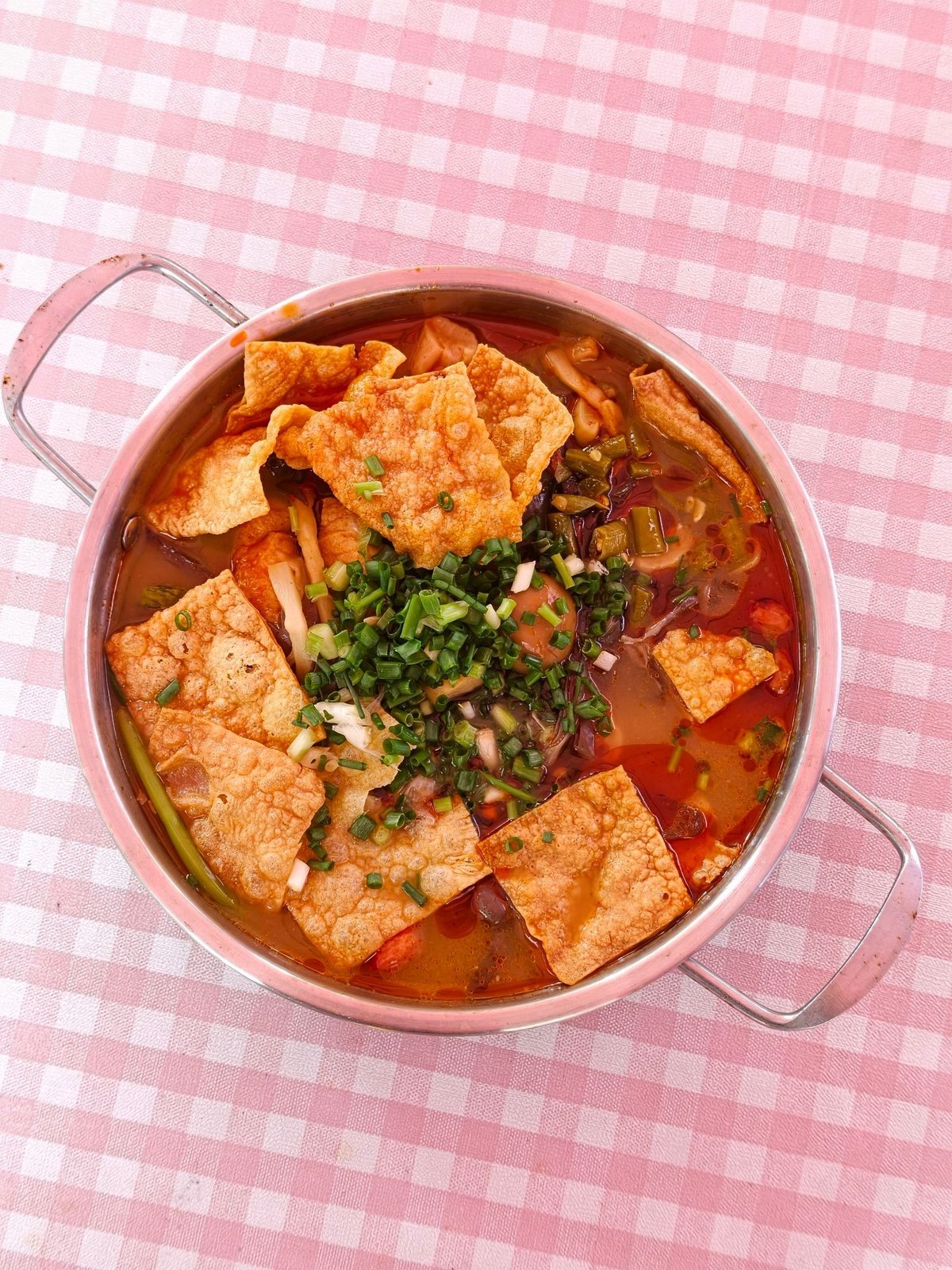
Beyond hotpot, xiaomian is the local breakfast: a few yuan for chilli, Sichuan pepper, spring onion and pickled greens, stirred together. The street stalls are full, and plenty of people eat standing at the kerb. It is the truest taste of the place.
The metro and monorail reach almost everywhere, rides cost ¥2–10 (about $0.3–1.4), and a transit QR code or card both work. Jiangbei airport connects to the centre on Lines 3 and 10, while high-speed trains from Chengdu, Wuhan and Xi’an arrive at Chongqing North or Chongqing West.
Don’t drink the tap water. Hotels have kettles and bottled water costs ¥2–3 (about $0.3–0.4) everywhere. Summer is scorching, so avoid the afternoon; autumn and winter suit the stairways best, though the riverside needs an extra layer.
There is no separate Chongqing visa — China's national rules apply. Passports from most European countries, plus Australia, New Zealand, Japan, South Korea and Canada currently get 30 days visa-free; US and UK passports can use the 240-hour transit waiver with an onward ticket. Check mfa.gov.cn before you book.
Metro Lines 3 and 10 both reach the centre in about 40 minutes (¥7–10, about $1–1.4). A taxi to Jiefangbei is ¥80–120 (about $11–17), 40–60 minutes depending on traffic.
The beef-tallow broth is hotter than many versions elsewhere, but "mild" is a real option. Start there, and use the sesame-oil dip to cool each bite. Tripe and duck intestine only need ten-odd seconds.
A notch below Beijing and Shanghai. Xiaomian ¥8–15 (about $1.1–2.1), hotpot ¥100–200 (about $14–29) a person, mid-range hotels ¥250–500 (about $36–71). The metro is excellent and keeps transport costs low.
Three full days. Two in the core city — old lanes, stairways, cableway, night views — and one for Wulong Karst. Two days in the city alone also fills up nicely.
Chongqing is vertical: the same address can span several floors, and navigation routinely gets confused. Follow street signs and ask locals — it beats staring at a screen.
One email, no forms. Tell us when you land and what you like eating.
Plan with us →The neighbourhoods and day trips worth the trip out.
02Ready-made routes by length, with fixes for rain and closed museums.
03What to order, where to sit, and what to do after dark.
04Concerts, exhibitions and the seasonal windows locals wait for.
05The long reads — history, culture and the questions visitors get wrong.
06Payments, trains, data, language — the same in every city.
07Send your dates and we send back a day-by-day plan.