Du Fu Thatched Cottage
Du Fu lived in Chengdu for a few years. The original hut is long gone, but the garden was built around his poems — and the garden is better than the house.
Rated for foreign travellers
Six things overseas visitors weigh most in China, scored 1 to 5. Based on what travellers actually ask about before they come.
- SafetyHow safe it feels
- 4.7
- Getting thereTransit convenience
- 4.4
- EnglishEnglish signs & staff
- 3.7
- PaymentsEasy to pay
- 4.5
- CleanClean & comfortable
- 4.6
- ValueWorth the money
- 4.4
Du Fu spent several years in western Chengdu during a period of war and wrote more than two hundred poems here. The thatched hut itself disappeared long ago. What remains is a garden made from the idea of that life, and it is a very good garden to walk through.
Enter through the moon gate
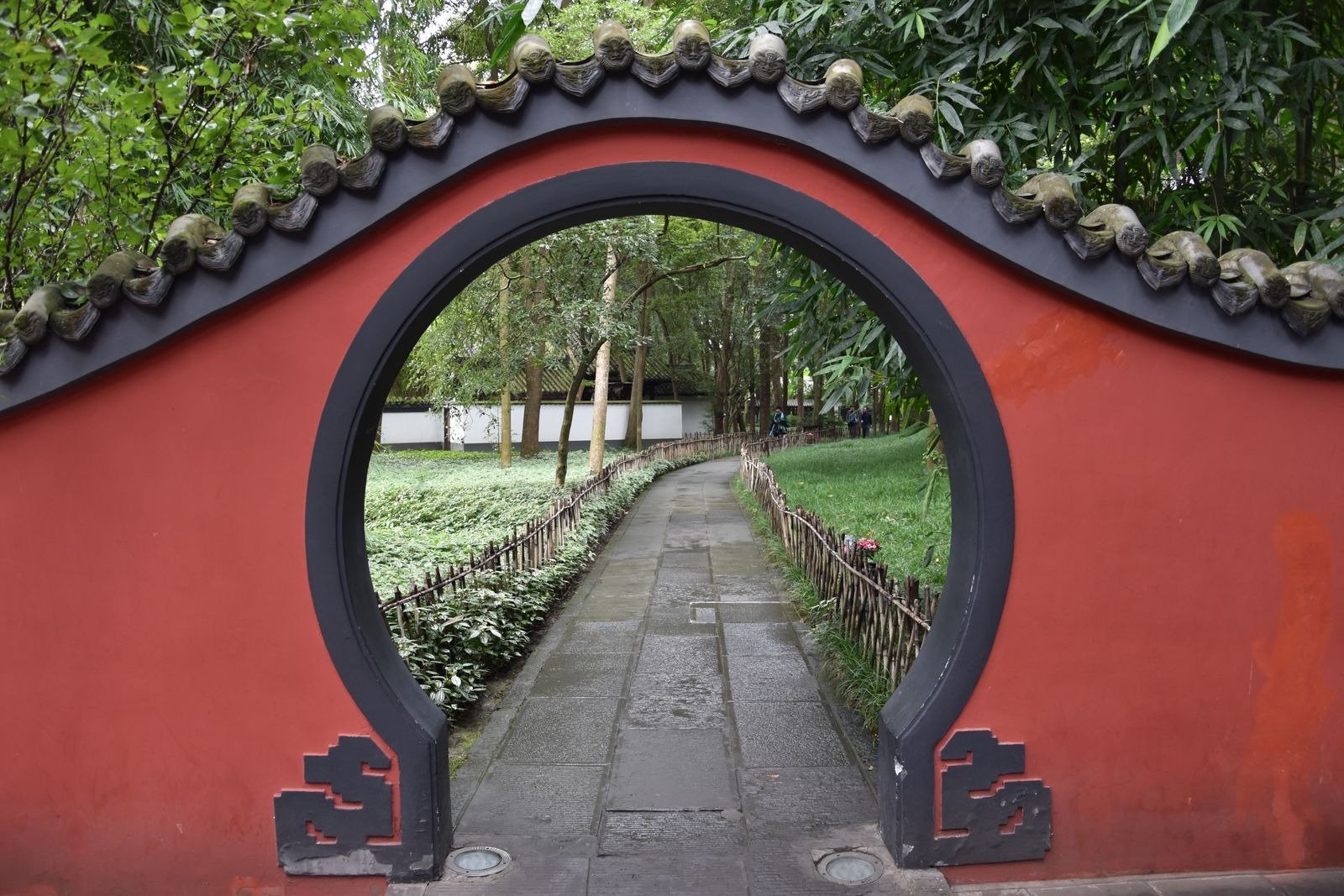
Bamboo blocks the view at first, and the round moon gate appears after a few steps. Red wall, dark tile, bamboo shadows, and a stone path framed in the opening — this is the standard Chengdu garden picture, and people stop here a long time with their phones.
Further in, the former residence is reconstructed as a deliberately humble set of low, thatched buildings with a writing table and a bed. Whether it is authentic barely matters; standing under the eaves and remembering the line about a leaking roof gives the poem real weight.
The garden is the point
The time worth spending is in the grounds: waterside pavilions, small bridges, a stand of nanmu trees, a lotus pond, paths that curve and change the view at every turn. The Poetry History Hall sets out Du Fu’s life and work; if you read Chinese, give it attention. If not, the garden needs no translation.
There is a tea seat inside. A bowl of tea costs ¥15–30 (about $2–4), and the bamboo chairs creak while people play cards nearby — normal behaviour for a Chengdu park.
How to fit it in
The cottage and Wuhou Shrine are close enough for one afternoon. Red walls at the shrine in the morning, bamboo at the cottage in the afternoon, hotpot back in the city at night. For quiet, come just after opening.
Admission is ¥50 (about $7). Take the metro to Caotang North Road and walk. Paths are level, but stone gets slick after rain, so wear shoes with grip.
Before you go
Is this Du Fu's original house?
No. The hut was lost after he left; what stands now is a later reconstruction built around the poems. The garden and the exhibition in the Poetry History Hall are the real draw.
How long does it take?
An hour to ninety minutes at an easy pace. Forty minutes is enough if you just want the moon gate photograph.
When is best?
Autumn, for the bamboo and osmanthus. Summer is shaded and cool; rain adds atmosphere but makes the stone paths slippery.
More in Chengdu


Want a plan that fits your dates?
Tell us your dates, budget and what you actually like doing — we will send back a day-by-day plan by email. No charge for the first draft.
Plan with us →