The Great Wall
Badaling is the postcard; Jinshanling is the real thing. Pick the right section, choose a clear day, start early, and this will be the best day of the trip.
Rated for foreign travellers
Six things overseas visitors weigh most in China, scored 1 to 5. Based on what travellers actually ask about before they come.
- SafetyHow safe it feels
- 4.5
- Getting thereTransit convenience
- 3.8
- EnglishEnglish signs & staff
- 3.8
- PaymentsEasy to pay
- 4.2
- CleanClean & comfortable
- 4.4
- ValueWorth the money
- 4.3
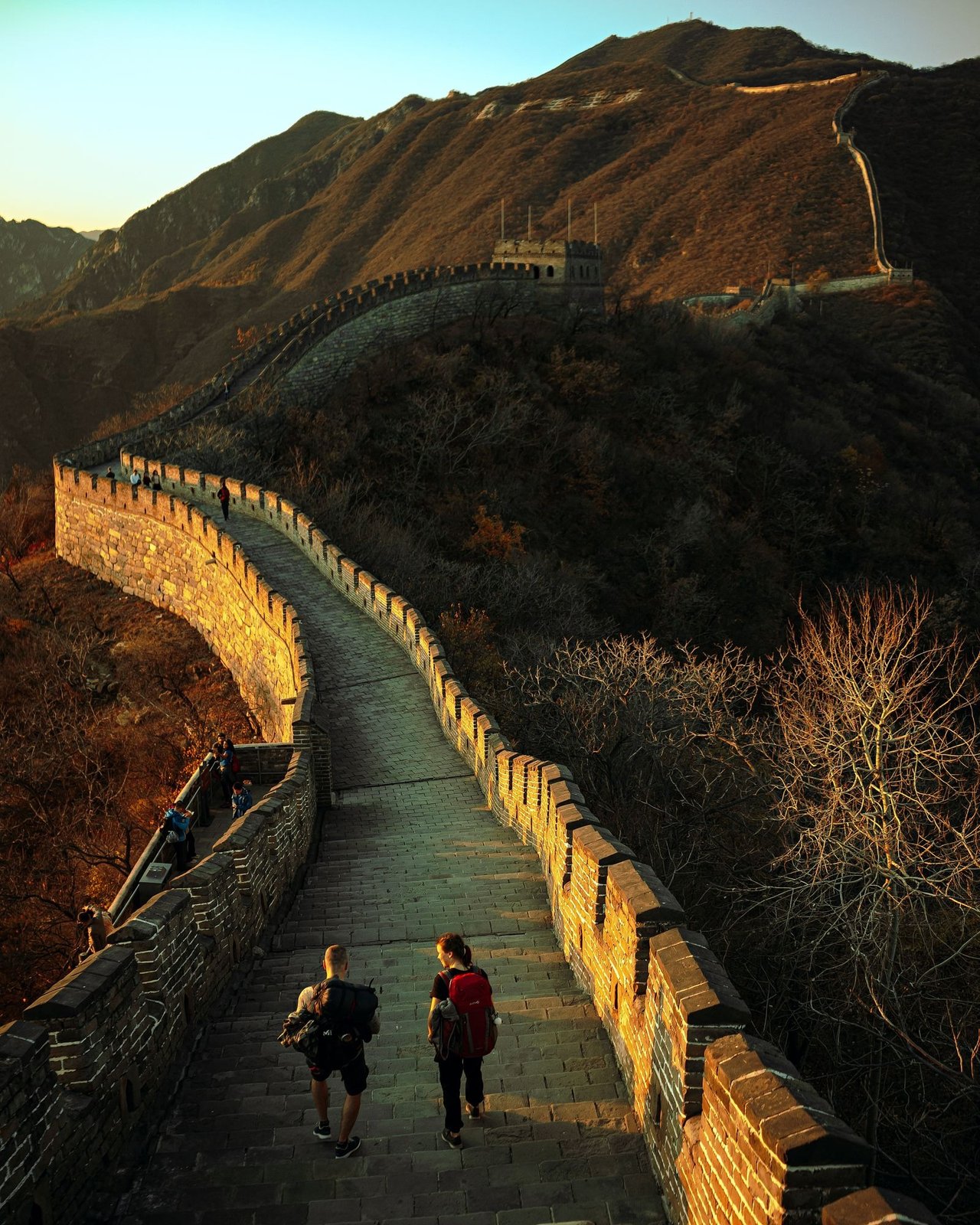
The Great Wall is not one line. It is several entirely different experiences. Badaling is the most restored and the most convenient, and it feels like an attraction; Mutianyu has good views and facilities; Jinshanling is what many Beijingers consider the real wall — ramparts rising and falling along the ridge, some sections restored, some collapsed to their foundations, and often not another person in sight.
Mutianyu: the easy one
An hour and a half by car from the city, ¥45 (about $6.4) entry. The wall climbs the hillside, watchtowers are close together, and the views are wide. Take the cable car to tower fourteen and walk the ramparts in either direction; the toboggan back down is a hit with kids.
It does get tour groups, but far fewer than Badaling. Go on a weekday, leave at seven, and before ten you can still find quiet stretches.
Jinshanling: the one you came for
Another hour east, ¥65 (about $9.3). This is a different place: the wall runs along the Yanshan ridge in brick that is genuinely old, crenellations intact in some spots and broken in others, tower after tower. Because it takes a ticket and a less convenient transfer, crowds are thin.
Expect exposure — there is almost no shade on the ramparts. Carry plenty of water, wear shoes with grip, and watch the steps where the masonry has crumbled.
How to plan the day
The wall is northeast of the city; with the drive and the walking, it takes the whole day. Leave at seven on a weekday, be on your way back by early afternoon, and you will be home by mid-afternoon. Do not pair it with other sights — the road time alone is four or five hours.
A hired car is the simplest option beyond the ticket, and split between four people it is not expensive. Public transport saves money, but check the last bus before you set out.
Do not ignore the weather
Check the forecast the day before and again on the morning. On a clear day the wall turns gold in the sun; in fog you can see nothing ahead of you, and the ticket and the drive are wasted. Winter wind on the ramparts is far colder than in the city — bring gloves and a hat.
Before you go
Which section for a first visit?
Mutianyu for an easy day — short transfer, good facilities, cable car and toboggan. Jinshanling for the real wall, where restored and weathered sections run together along the ridge and almost nobody is around.
How do I get there independently?
Mutianyu has shuttle buses from the city or you can hire a car; Jinshanling is usually reached by hired car or self-drive, about two hours each way. Be wary of day tours that add shopping stops.
Do I have to take the cable car?
No. At Mutianyu you can walk the wall in both directions; at Jinshanling it is all on foot. For limited mobility, cable car up and toboggan down at Mutianyu is the easiest combination.
Should I go in bad weather?
Skip fog and heavy pollution days — visibility is the whole point. Check the air-quality index on the morning you leave.
More in Beijing
Want a plan that fits your dates?
Tell us your dates, budget and what you actually like doing — we will send back a day-by-day plan by email. No charge for the first draft.
Plan with us →